Budget Consultation 2027-28

Every year Kent County Council (KCC) must agree a balanced budget. This means making sure the money we spend on services is fully covered by the money we receive from Council Tax, Government grants, a share of Business Rates, and some service charges.

We provide a wide range of services to Kent’s 1.6 million residents, spending over £2.8 billion each year. We are responsible for many of the services that affect people’s daily lives across the whole of Kent. These include things like social care for children and adults, support for education, waste disposal, public health, libraries and roads. These services support people every day, especially those who need extra help.

Although we have reduced debt by £142 million and made savings, we still face serious financial pressures.

Demand for services is rising, especially in children’s services and adult social care. At the same time, costs are increasing due to inflation and higher energy prices.

Global events and international tensions are also affecting the wider economy. This is pushing up the cost of energy, supplies and contracts. These pressures affect both the cost of delivering council services and household budgets.

As we plan the 2027-28 budget, we will need to make difficult decisions about service priorities and Council Tax.

Even if Council Tax is increased by the maximum allowed, there could still be a significant budget gap of between £100 million and £120 million.

Each 1% increase in Council Tax generates £10.5 million for KCC. The table below provides examples of the potential financial impact of a Council Tax rise at a range of levels, using a Band D property as an example:
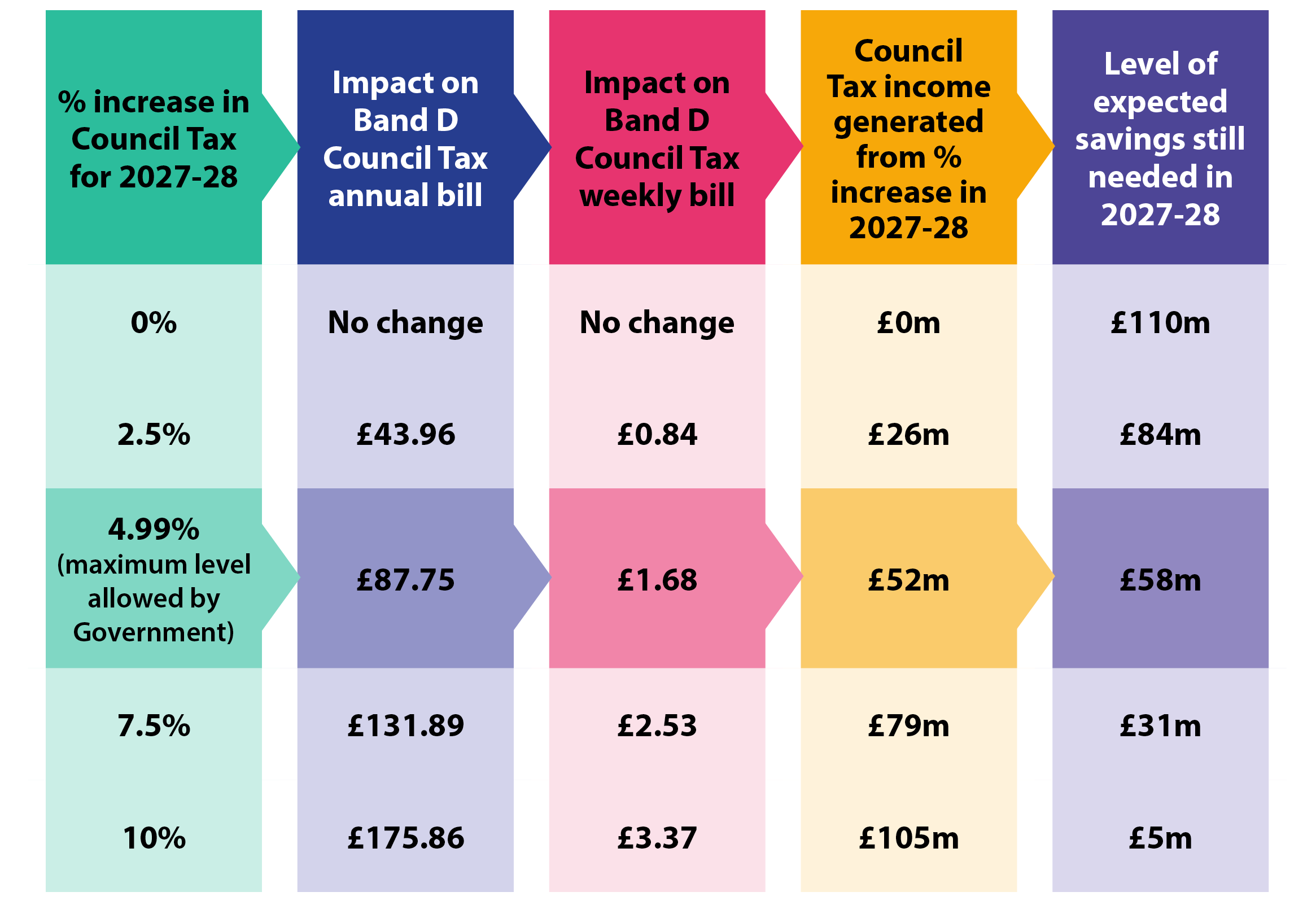
Table with 5 columns. The first column shows options for percentage increases in Council Tax for 2027-28. The second column shows what these increases would be for a Band D Council Tax annual bill. The third column shows what these increases would mean for the weekly bill. Column four shows the amount of Council Tax income generated for each option. Column five shows the level of expected savings still needed in 2027-28 for each of the options. At 0 percent increase, the impact on Band D's annual bill would be no change. The impact on the weekly bill would also be no change. The Council Tax generated would be £0m and the level of expected savings still needed in 2027 to 2028 would be £110 million. At a 2.5 percent increase, the impact on Band D's annual bill would be £43.96. The impact on the weekly bill would be 84 pence. The Council Tax generated would be £26 million and the level of expected savings still needed in 2027 to 2028 would be £84 million. At a 4.99 percent increase (the maximum allowed by government), the impact on Band D's annual bill would be £87.75. The impact on the weekly bill would be £1.68. The Council Tax generated would be £52 million and the level of expected savings still needed in 2027 to 2028 would be £58 million. At a 7.5 percent increase, the impact on Band D's annual bill would be £131.89. The impact on the weekly bill would be £2.53. The Council Tax generated would be £79 million and the level of expected savings still needed in 2027 to 2028 would be £31 million. At a 10 percent increase, the impact on Band D's annual bill would be £175.86. The impact on the weekly bill would be £3.37. The Council Tax generated would be £105 million and the level of expected savings still needed in 2027 to 2028 would be £5 million.

More information is available in the Consultation Document, which we recommend you read before taking part in the consultation.

A Busy Reader Summary, Easy Read and Large Print versions are available in the Documents section on this webpage.

Have your say

We need to hear your views on:

  • priorities for making savings across our different service areas
  • how we could save money and increase income
  • our Council Tax options.

Tell us your views by filling in the consultation questionnaire.
Complete the consultation questionnaire

If you cannot complete the online version of the questionnaire, a Word version is available from this webpage, which you can complete and return either by email or post.

Your responses will be considered by County Councillors at Cabinet Committee meetings, before the budget proposals are finalised and considered for approval by County Council in February 2027.

What we spend our budget on

For every £100 we spend, this is how it is split between the various services we provide:
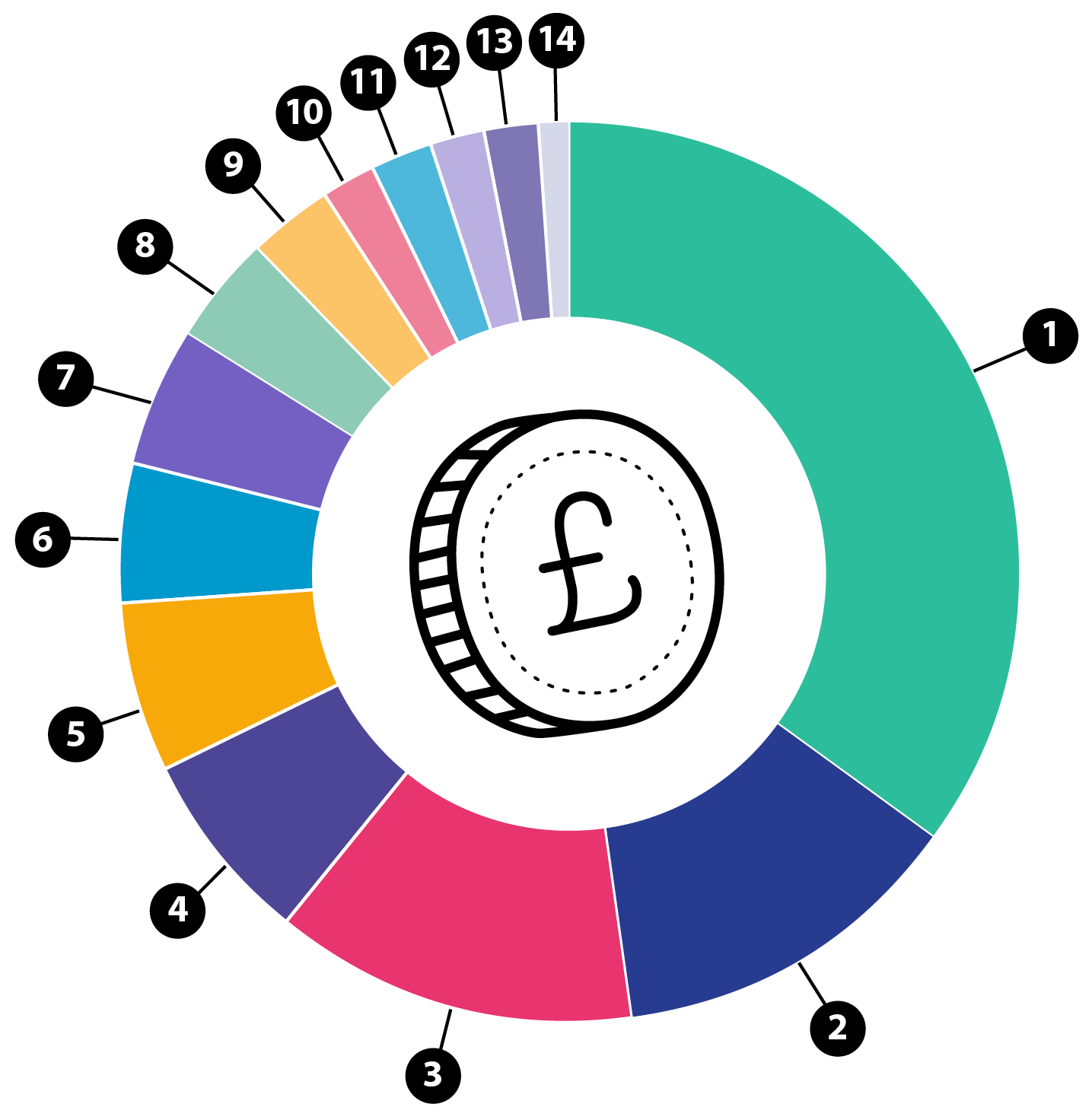
A chart showing a pound coin with colourful sections, presenting the different services we provide and the amount spent on each service. Adults and older people: £35 Children's social care: £13 Children's other services: £13 Schools and high needs: £7 Transport services: £6 Management, support services and overheads: £5 Borrowing costs: £5 Waste services: £4 Public health: £3 Highways: £2 Community services: £2 Cost of running our operational premises £2 Other direct services to the public: £2 Schools' support services: £1

NoServiceAmountNoServiceAmount
1Adults and older people£358Waste services£4
2Children's social care£139Public health£3
3Children's other services£1310Highways£2
4Schools and high needs£711Community services£2
5Transport services £612Cost of running our operational
premises
£2
6Management, support services and overheads
£513Other direct services to the public
£2
7Borrowing costs£514Schools' support services£1


How we are funded

Councils have four main sources of funding:

  • Council Tax
  • Government grants (ringfenced (allocated) for a specific purpose and un-ringfenced)
  • Income from service users
  • Business Rates.

For every £100 of funding we receive to fund our £2.8 billion revenue budget, this is how it is split between the different sources of funding:
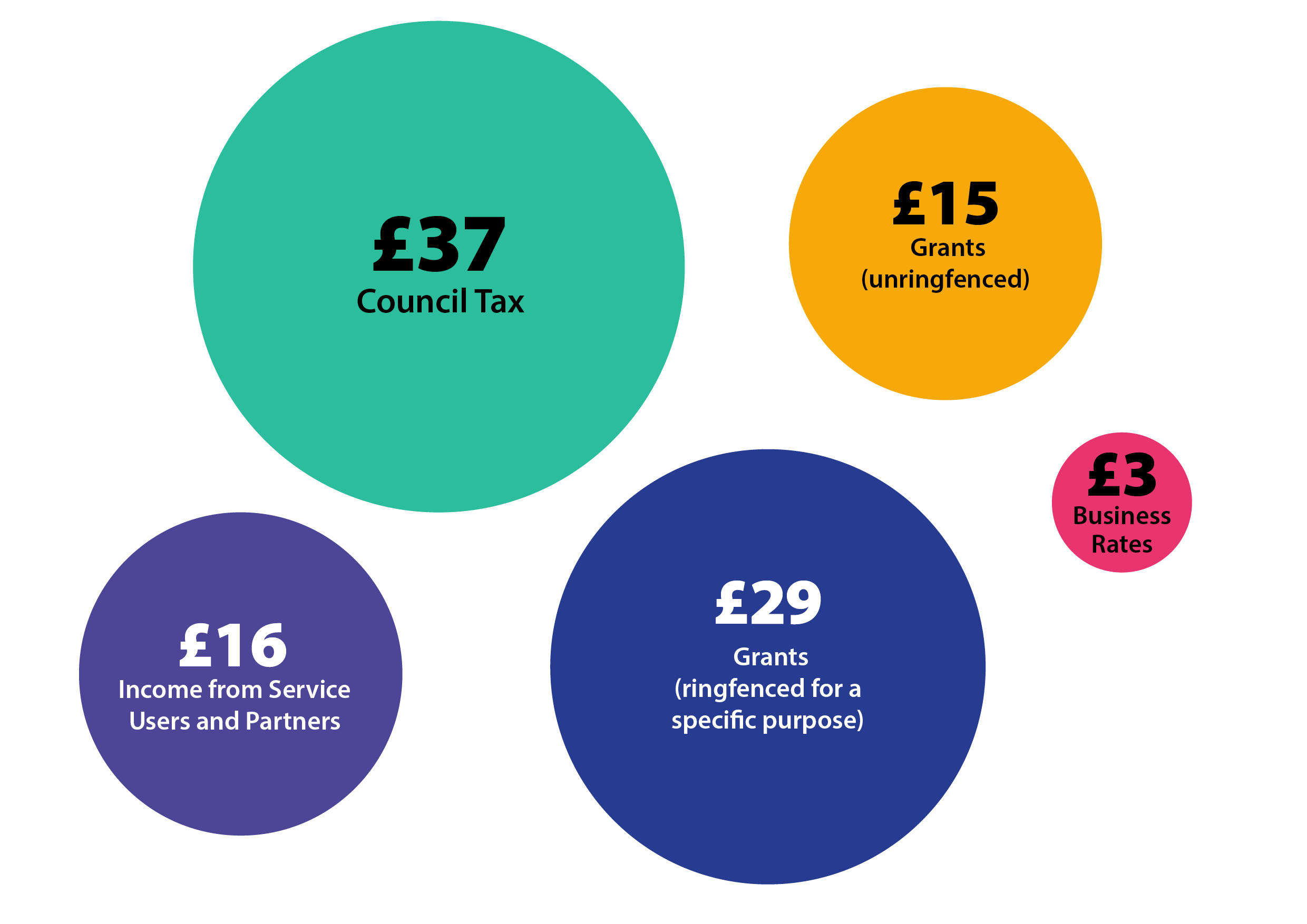
£37 Council Tax, £29 Grants (ringfenced for a specific purpose), £16 Income from Service Users and Partners, £15 Grants (unringfenced), £3 Business Rates

NoFundingAmount
1Council Tax
£37
2Grants (ringfenced for a specific purpose)
£29
3Income from service users£16
4Grants (unringfenced)£15
5Business Rates£3

Every year Kent County Council (KCC) must agree a balanced budget. This means making sure the money we spend on services is fully covered by the money we receive from Council Tax, Government grants, a share of Business Rates, and some service charges.

We provide a wide range of services to Kent’s 1.6 million residents, spending over £2.8 billion each year. We are responsible for many of the services that affect people’s daily lives across the whole of Kent. These include things like social care for children and adults, support for education, waste disposal, public health, libraries and roads. These services support people every day, especially those who need extra help.

Although we have reduced debt by £142 million and made savings, we still face serious financial pressures.

Demand for services is rising, especially in children’s services and adult social care. At the same time, costs are increasing due to inflation and higher energy prices.

Global events and international tensions are also affecting the wider economy. This is pushing up the cost of energy, supplies and contracts. These pressures affect both the cost of delivering council services and household budgets.

As we plan the 2027-28 budget, we will need to make difficult decisions about service priorities and Council Tax.

Even if Council Tax is increased by the maximum allowed, there could still be a significant budget gap of between £100 million and £120 million.

Each 1% increase in Council Tax generates £10.5 million for KCC. The table below provides examples of the potential financial impact of a Council Tax rise at a range of levels, using a Band D property as an example:

Table with 5 columns. The first column shows options for percentage increases in Council Tax for 2027-28. The second column shows what these increases would be for a Band D Council Tax annual bill. The third column shows what these increases would mean for the weekly bill. Column four shows the amount of Council Tax income generated for each option. Column five shows the level of expected savings still needed in 2027-28 for each of the options. At 0 percent increase, the impact on Band D's annual bill would be no change. The impact on the weekly bill would also be no change. The Council Tax generated would be £0m and the level of expected savings still needed in 2027 to 2028 would be £110 million. At a 2.5 percent increase, the impact on Band D's annual bill would be £43.96. The impact on the weekly bill would be 84 pence. The Council Tax generated would be £26 million and the level of expected savings still needed in 2027 to 2028 would be £84 million. At a 4.99 percent increase (the maximum allowed by government), the impact on Band D's annual bill would be £87.75. The impact on the weekly bill would be £1.68. The Council Tax generated would be £52 million and the level of expected savings still needed in 2027 to 2028 would be £58 million. At a 7.5 percent increase, the impact on Band D's annual bill would be £131.89. The impact on the weekly bill would be £2.53. The Council Tax generated would be £79 million and the level of expected savings still needed in 2027 to 2028 would be £31 million. At a 10 percent increase, the impact on Band D's annual bill would be £175.86. The impact on the weekly bill would be £3.37. The Council Tax generated would be £105 million and the level of expected savings still needed in 2027 to 2028 would be £5 million.

More information is available in the Consultation Document, which we recommend you read before taking part in the consultation.

A Busy Reader Summary, Easy Read and Large Print versions are available in the Documents section on this webpage.

Have your say

We need to hear your views on:

  • priorities for making savings across our different service areas
  • how we could save money and increase income
  • our Council Tax options.

Tell us your views by filling in the consultation questionnaire.

Complete the consultation questionnaire

If you cannot complete the online version of the questionnaire, a Word version is available from this webpage, which you can complete and return either by email or post.

Your responses will be considered by County Councillors at Cabinet Committee meetings, before the budget proposals are finalised and considered for approval by County Council in February 2027.

What we spend our budget on

For every £100 we spend, this is how it is split between the various services we provide:

A chart showing a pound coin with colourful sections, presenting the different services we provide and the amount spent on each service. Adults and older people: £35 Children's social care: £13 Children's other services: £13 Schools and high needs: £7 Transport services: £6 Management, support services and overheads: £5 Borrowing costs: £5 Waste services: £4 Public health: £3 Highways: £2 Community services: £2 Cost of running our operational premises £2 Other direct services to the public: £2 Schools' support services: £1

NoServiceAmountNoServiceAmount
1Adults and older people£358Waste services£4
2Children's social care£139Public health£3
3Children's other services£1310Highways£2
4Schools and high needs£711Community services£2
5Transport services £612Cost of running our operational
premises
£2
6Management, support services and overheads
£513Other direct services to the public
£2
7Borrowing costs£514Schools' support services£1


How we are funded

Councils have four main sources of funding:

  • Council Tax
  • Government grants (ringfenced (allocated) for a specific purpose and un-ringfenced)
  • Income from service users
  • Business Rates.

For every £100 of funding we receive to fund our £2.8 billion revenue budget, this is how it is split between the different sources of funding:

£37 Council Tax, £29 Grants (ringfenced for a specific purpose), £16 Income from Service Users and Partners, £15 Grants (unringfenced), £3 Business Rates

NoFundingAmount
1Council Tax
£37
2Grants (ringfenced for a specific purpose)
£29
3Income from service users£16
4Grants (unringfenced)£15
5Business Rates£3
  • You do not have to register with this website before completing this questionnaire. However, registration does mean that you can opt in to be kept informed on this and other KCC engagement and consultation activities and you will receive an email with your answers to the questionnaire once you have submitted it. If you are already registered with Let's Talk Kent we encourage you to sign in before completing the questionnaire. 

    Privacy: Kent County Council (KCC) collects and processes personal information in order to provide a range of public services. KCC respects the privacy of individuals and endeavours to ensure personal information is collected fairly, lawfully, and in compliance with the United Kingdom General Data Protection Regulation and Data Protection Act 2018. Read the full Privacy Policy.

    Complete questionnaire